


When the Earth Shook, the Church Opened its Doors in Colombia
Related News
Nepal Flood Response: The Alliance in Nepal Stands with Affected Communities
Men From Across Africa Gather in Mali to Strengthen Men’s Ministry
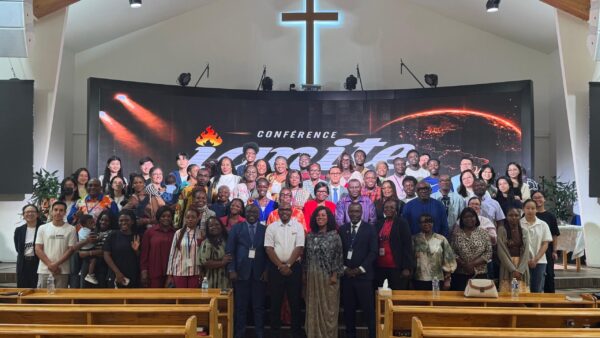
From Fire to Mission: A Generation Rises at IGNITE Paris 2026
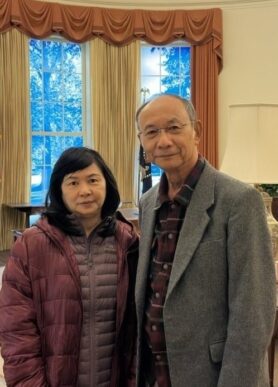
Meet Nguyễn Hữu Bình, the New President of the Alliance of Vietnam (South)
After Colombia’s earthquake, Alliance churches opened their doors, mobilized volunteers and served families through rescue, shelter, food, care and reconstruction.
On August 10, 2026, Colombia woke to a morning that would change thousands of lives.
A magnitude 7.4 earthquake shook large parts of the country, affecting communities in Chocó, Risaralda, Caldas, Valle del Cauca, Quindío and Cauca. Buildings collapsed, families searched for loved ones, roads were damaged, and interruptions to electricity and communications made it difficult for many communities to know what was happening.
But as the first hours passed, another story began to unfold.
The church opened its doors.
The Christian and Missionary Alliance (C&MA) Church in Colombia reported on August 14 that 25 churches, church plants and mission projects had been affected, along with 30 pastoral homes, the National Office and the Ebenezer Convention Center. Within the Alliance community, 1,012 families had been affected, one person had died and 12 had been injured. More than 1,000 homes have been destroyed and more than 1,500 partially damaged.
Some Alliance churches were dealing with damage of their own. Yet many did not stay behind their walls.
Churches became shelters. Members became volunteers. Congregations became collection centers. Pastors and leaders became a listening presence for people who were afraid and did not know what would happen next.
In Pereira, Cali, Buenaventura, Manizales and Zarzal, Alliance members joined rescue efforts, prepared and distributed food, collected supplies and opened their facilities to people who could not return home. In Cali, churches including San Bosco, Alfonso López and Taller de Vida, together with the Zarzal church, mobilized to serve their communities. Hechos de Vida in Cali, Pereira and Manizales Centro opened their spaces as shelters.
Someone Had Decided to Come
In some communities, the greatest challenge has been reaching those who need help.
Damaged roads, interruptions in electricity and communication, and distance between communities have made the response difficult. In Buenaventura, some Alliance churches and mission fields were unable to establish communication for several days. When contact was finally restored, they learned that families had lost their homes and that some communities had not yet received assistance.
The churches closest to those communities had also experienced the earthquake.
But they responded.
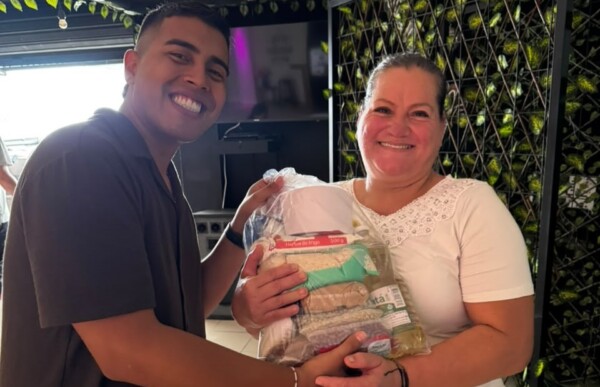
Food was collected. Supplies were gathered. And members traveled to communities that were waiting for someone to come.
The help was not enough to meet every need.
But it carried a message: Someone had heard them. Someone knew they were hurting. Someone had decided to come. That is what presence means.
Beyond the Numbers
The national emergency continues to grow. According to figures reported by Colombia’s National Unit for Disaster Risk Management on August 14, about 285 people had died, 3,975 had been injured, 379 were missing, and more than 102,000 people had been affected. More than 45,000 families were affected, and 12,828 homes were destroyed.
Behind every number is a person.
Behind every damaged house is a family.
And behind every church building with cracks in its walls is a congregation asking how it can continue to serve.
For some communities, the earthquake has also reopened old wounds. In Quindío, families are again facing fear and uncertainty in a region marked by the devastating 1999 earthquake. The church is responding not only with food, shelter and practical help, but also with prayer, pastoral care and emotional first aid.
Because rebuilding does not only mean putting walls back together.
It means helping people recover a sense of safety.
It means sitting with those who are afraid.
It means helping families look toward tomorrow when tomorrow is difficult to imagine.
A Church that Continues to Serve
The Colombian Alliance has a long history of serving through difficult seasons. Since its beginnings in 1923, the church has grown across Colombia, reaching communities in rural areas, the Pacific coast and major cities. Its history has included seasons of persecution, violence and loss, yet the church continued to establish congregations, train leaders and proclaim Christ.
Today, that calling is visible again.
Alliance volunteers and professionals are preparing to serve in debris removal, emotional and spiritual care, engineering and architectural assessments, logistics, food distribution, shelter, housing reconstruction and pastoral accompaniment.
The first days after a disaster are filled with urgent needs.
But reconstruction will take much longer.
Some families will have to rebuild their homes. Others will have to begin again after losing their possessions. Some are grieving loved ones. Others survived but are still afraid each time the ground moves. And pastors, leaders and Alliance families also need care as they serve people who are carrying their own pain.
Hope Has a Name
The Colombian Alliance is asking the global Alliance family to continue praying—for families who have lost loved ones, for those whose homes have been destroyed, for rescue teams, authorities and volunteers, and for pastors, leaders and congregations across the affected regions.
The church has received messages from around the world asking a simple question, “How can we help?”
For a church serving in the middle of an emergency, that question carries meaning.
It says that you are not alone.
Today, Colombia needs help.
But Colombia also needs hope.
And the church knows where that hope is found: in Jesus Christ.
So, the Colombian Alliance continues to open its doors—to the person who is afraid, to the family without a home, to the neighbor who needs food, and to the community waiting for someone to come.
The work does not end when the rescue ends.
It continues through reconstruction, grief and the long days when the first urgency has passed.
It continues until families can begin to stand again.
And in the middle of a nation that has been shaken, the church continues to believe that Christ remains firm.