


Nepal Flood Response: The Alliance in Nepal Stands with Affected Communities
Related News
Men From Across Africa Gather in Mali to Strengthen Men’s Ministry
From Fire to Mission: A Generation Rises at IGNITE Paris 2026
When the Earth Shook, the Church Opened its Doors in Colombia

Meet Nguyễn Hữu Bình, the New President of the Alliance of Vietnam (South)
The Alliance in Nepal, under its relief and development NGO called Sundar Dhoka Saathi Sewa, is responding to the Nepal floods through emergency relief, volunteer support, and a three-phase plan to help affected families rebuild their lives.
The flood came with little time to escape. Along the Bhote Koshi River in Nepal, entire communities were swept away. Families who could escape fled toward nearby hillside communities, leaving behind homes, belongings, roads, and places where they had built their lives.
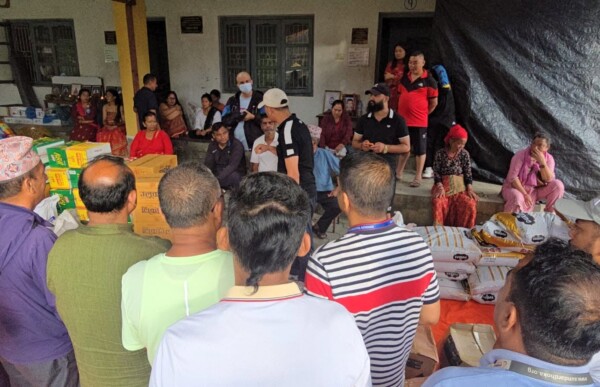
In the first hours, there was one priority: saving lives. For Sundar Dhoka Saathi Sewa, the response began within those first hours. While the Government of Nepal focused on rescue operations, the team mobilized and reached about 200 families with emergency relief during the first 48 hours.
But the needs were larger than any single organization could meet. The flood had struck an area where several hydropower projects were located. Workers were trapped inside tunnels, and rescuers faced the task of reaching people in places buried by water, mud, and debris. Saving lives became the first challenge.
Then the response entered a new phase.
From Relief to Coordination
As the government began large-scale relief operations, Nepal activated what is known as the One-Door System, a centralized approach for managing relief items. Sundar Dhoka began working with the District Administration Office in Kathmandu to support the management of supplies purchased by the government and donated by the public.
The work may happen away from the communities affected by the flood, but it is part of getting help to those communities. Volunteers sort, record, package, load, unload, organize, and prepare relief supplies for transportation. Between 80 and 90 volunteers have been mobilized across five government warehouses.
Every box must be accounted for. Every shipment must be prepared. Every item must make its way toward a family waiting for help. In a disaster of this scale, coordination is part of relief. And the work is not finished when the water goes down.
A Response That Looks Beyond the First Days
Sundar Dhoka is already preparing for what comes after the first emergency. Its plan has three phases.
The first is emergency relief, including food, shelter materials, tarpaulins, household items, hygiene supplies, and other urgent needs.
The second is rehabilitation and restoration. This phase includes medical camps, disability and rehabilitation support, education for children, family restoration, and community-based assistance.
The third is recovery and livelihoods. The goal is to help families rebuild through livelihood opportunities, skills development, small businesses, and other activities that can help generate income.
The organization expects that this work may require a commitment of up to three years because rebuilding a life takes more than replacing what was lost. At this stage, many details cannot yet be finalized. The situation continues to change, and the needs of affected communities are still being assessed.
Standing With Nepal
Sundar Dhoka has already received commitments totaling about half of the amount proposed for its long-term response and is continuing to seek additional partners. The organization has invited the Alliance World Fellowship to become a direct partner in this response. For Sundar Dhoka, partnership is not only about responding to the flood that has already happened. It is about remaining alongside families as they move from emergency relief toward restoration and recovery.
The flood changed the landscape of communities along the Bhote Koshi River. But it did not remove the willingness of people to help. In warehouses, volunteers continue to prepare supplies. In affected communities, families begin to face the work of rebuilding. And across Nepal, rescuers continue searching for those who have not yet been found.
The river carried away a lot. But people are still standing together. And for those who have lost so much, that presence matters.
Nepal Continues to Search and Recover
The disaster that struck Nepal on August 26 continues to affect communities across the country. The Bhote Koshi River floods caused extensive damage to homes, roads, bridges, hydropower facilities, and other infrastructure in Rasuwa, Nuwakot, Dhading, and other districts along the river. Nepal’s Ministry of Foreign Affairs reported on September 6 that search and rescue operations were continuing the twelfth day after the disaster.
The flood followed the collapse of a glacier in the Himalayas, sending water, rock, ice, mud, and debris through river valleys along the Nepal-China border. The destruction affected villages and hydropower facilities, where workers became trapped in tunnels.
On September 8, Reuters reported that at least 1,399 people had died and more than 5,400 remained missing across Nepal and Tibet. Rescue teams were still searching for workers believed to be trapped in hydropower tunnels.
There have also been moments of hope. Two hydropower workers were rescued alive after spending nine days inside a tunnel at the Upper Trishuli 3A project. Their rescue renewed hope for others still missing.
Nepal is now facing not only the work of finding survivors and caring for displaced families, but also the long process of rebuilding communities and infrastructure. The scale of the destruction has made clear that the response will need to continue well beyond the first days of the disaster.